


Italian Easter Bread
This post may contain affiliate links.


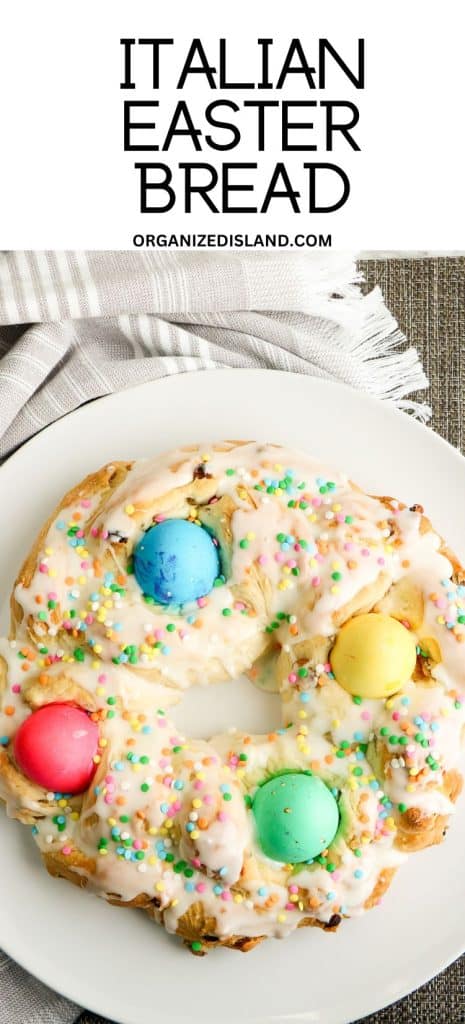
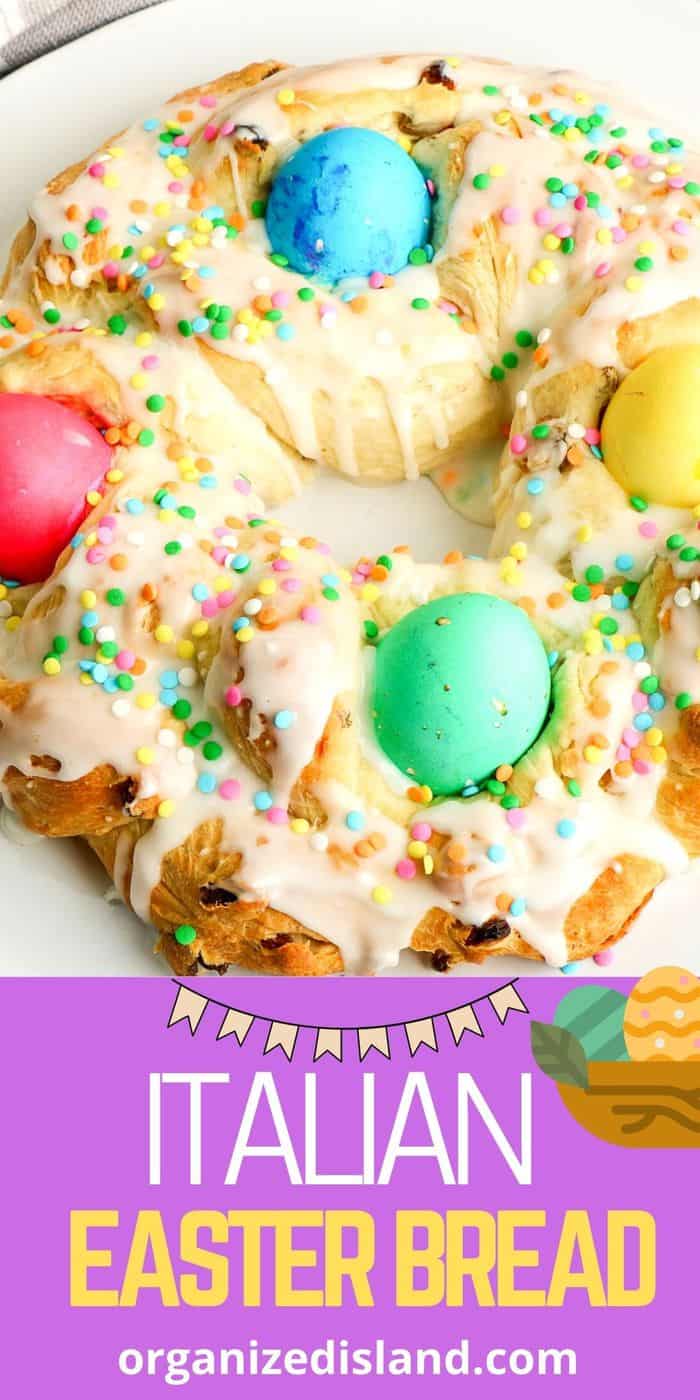
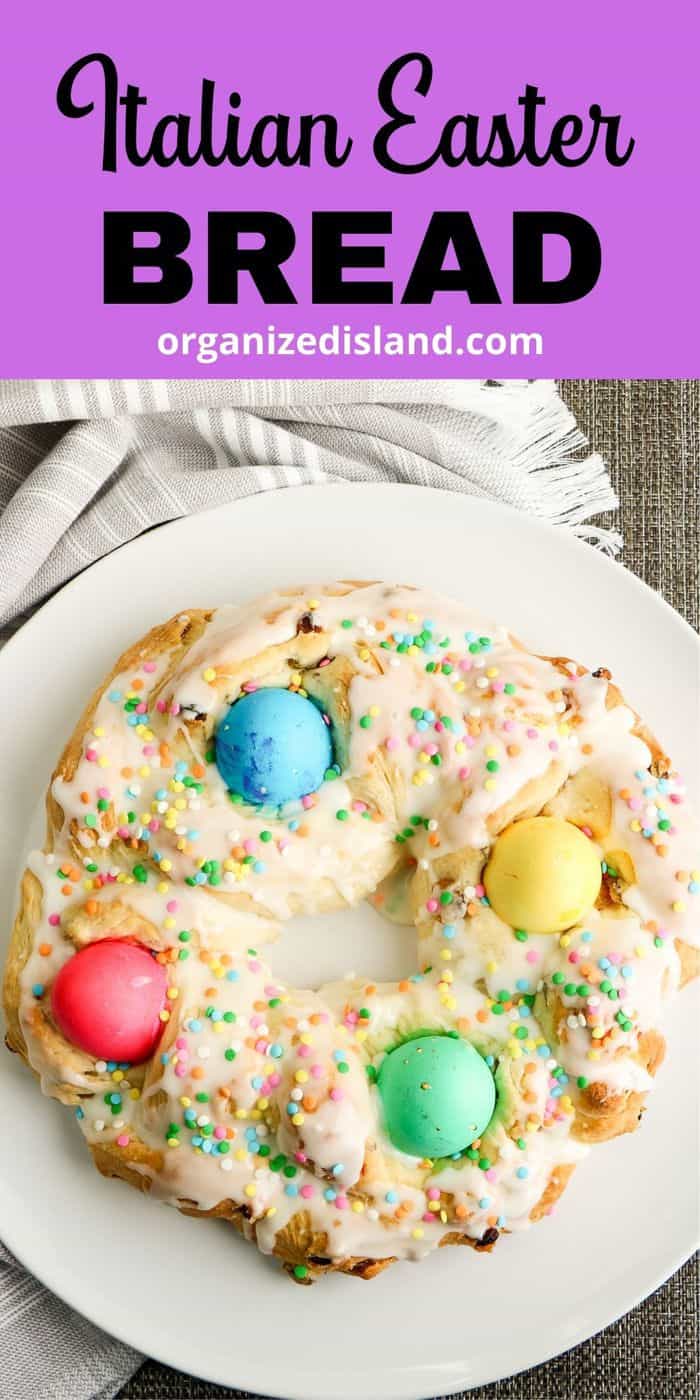
Italian Easter Bread, also known as “Pane di Pasqua,” is a beautiful and symbolic sweet bread that’s perfect for your Easter celebration. This traditional recipe incorporates dyed eggs, a tender dough, and a sweet glaze, making it a stunning centerpiece for Easter morning.
Shaped into a wreath, it symbolizes the “Crown of Thorns” worn by Jesus Christ, while the eggs tucked into the bread represent new life. This recipe is a wonderful family tradition, and it’s easier to make than you might think, even if it’s your first time!
Why You’ll Love This Recipe
- Versatile glaze: The optional glaze, made with powdered sugar, milk, and lemon juice, adds a touch of sweetness to the finished bread. You can even add colorful sprinkles for extra flair!
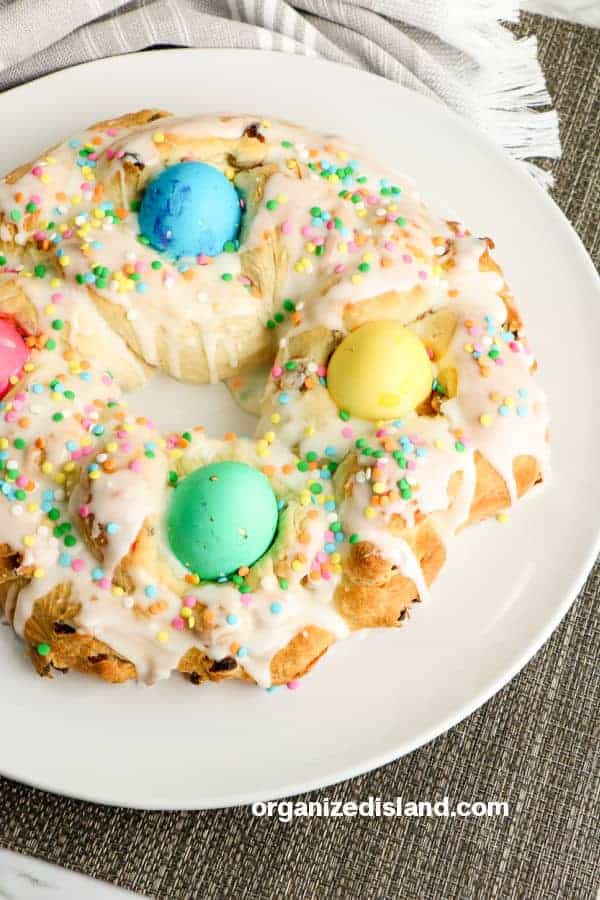
- Beautiful presentation: The bread, shaped like a wreath and decorated with colorfully dyed Easter eggs, looks stunning on any table.
- Tender and sweet: A soft, sweet dough flavored with golden raisins, butter, and a hint of anise (if you like), reminiscent of challah bread or brioche, makes this bread absolutely delicious.
- Easy to make: Don’t worry if it’s your first time. The recipe uses simple ingredients like active dry yeast, sugar, and milk, which are likely already in your pantry.
- Perfect for Easter celebrations: Whether served on Palm Sunday, Easter morning, or as part of a traditional Italian Easter celebration, this bread symbolizes both the “Bread of Life” and new beginnings.
Serve this with this cute Easter charcuterie board for a fun presentation.

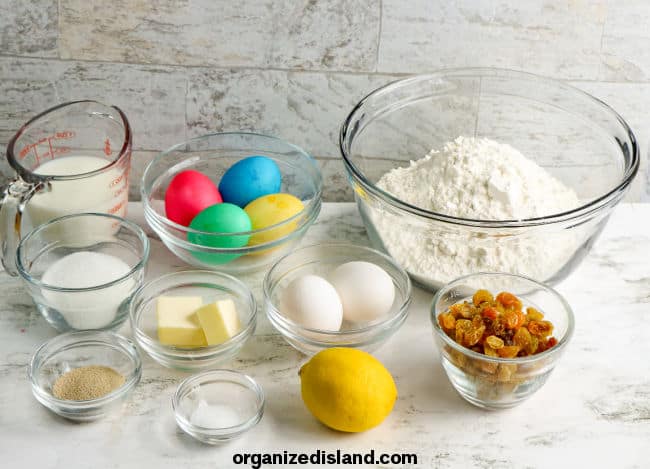
Ingredients for traditional Italian Easter bread
- All-purpose flour – The main component for creating the bread.
- Active dry yeast – For helping the dough rise.
- Sugar and Spice – For flavor.
- Milk – Needed for the liquid to help bind the dough and also for the glaze.
- Unsalted butter – If all you have is salted butter, make certain to omit the salt in the recipe.
- Eggs – Another binder for the dough.
- Golden raisins – Natural sweetness for the bread.
- Uncooked but dyed eggs – Topping for the Easter bread recipe.
- Powdered Sugar – Addition to make the homemade glaze sweet.
- Lemon Juice – Gives the glaze a lemon flavor.
Equipment and kitchen tools
- Stand mixer with dough hook
How to make easy Italian Easter bread
- In a mixing bowl, whisk together 1 cup of flour, yeast, sugar, and salt.
- Place 2 tablespoons of butter into a microwave-safe container with the milk. Microwave on high for 30 seconds. Check the temperature with an instant-read thermometer. If the milk has not reached 110 degrees, return to the microwave for an additional 10 seconds.
- Pour the milk into the mixing bowl and beat until combined. Add the eggs one at a time, and continue beating until the mixture is smooth.
- Begin adding flour in small scoops until a soft dough is formed.

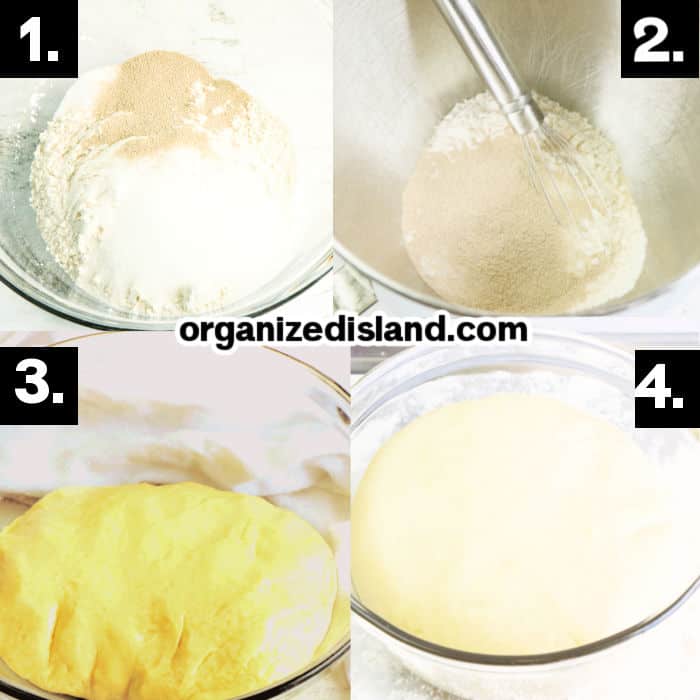
- Switch the mixing hook for a dough hook and knead the dough on medium speed for 5 to 7 minutes.
- Transfer the dough to an oiled bowl and turn once. Cover and allow to rise in a warm place free of drafts for approximately 1 hour, until it has doubled in size.
- Punch down the dough to deflate the air. Turn the dough out onto a lightly floured surface and pat it flat. Sprinkle with raisins and knead to combine.
- Divide the dough into three equal pieces.
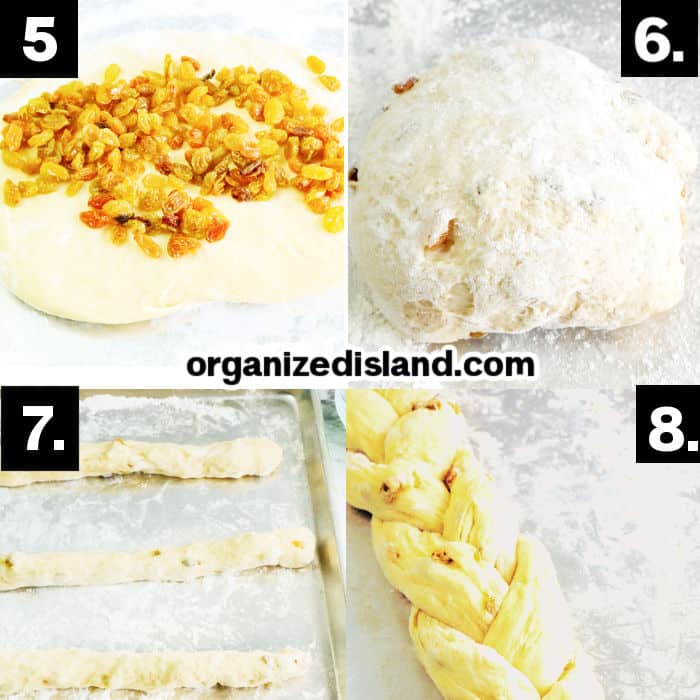
- Roll each piece of dough into a long rope by running your hands over the dough, pushing the dough from the center to the ends as you move your hands forward and backward over the dough. If the dough continues to be too elastic to retain its length, allow the dough to relax while you work on a different piece. Dough strands should be approximately 20 inches long.
- Line the strands parallel to one another. Squeeze one side of the ends together.
- To braid, start with the third strand from the left. Gently pass the strand over the 2nd strand and under the 1st strand, like a basic basket weave. Then, move to the strand all the way to the right and begin weaving over and under each strand until it reaches the left. Repeat with additional strands (about twice) until the bread is braided. Shape into a wreath and squeeze the ends together, tucking the squeezed ends under the bread.
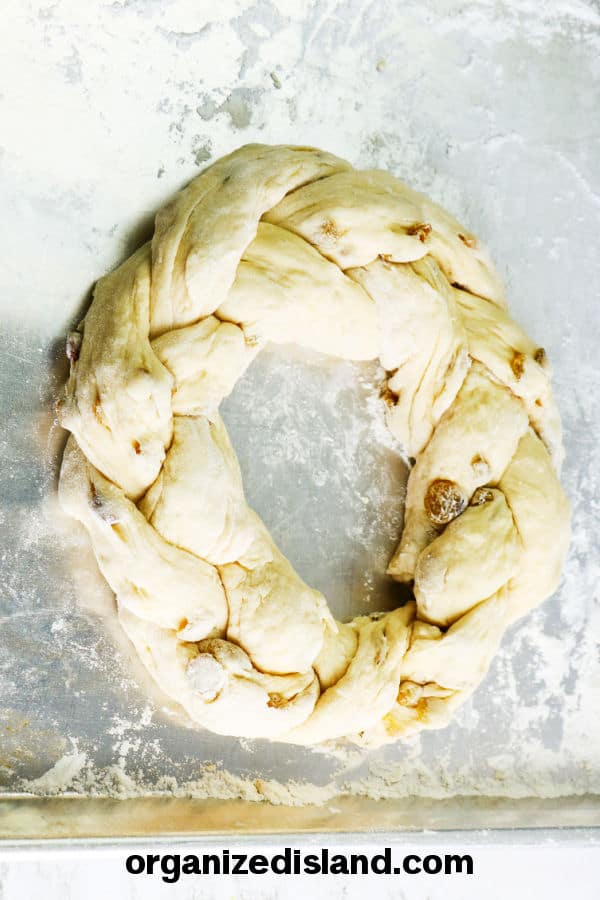
Adding the Eggs to Italian Easter Bread
- Tuck the uncooked, dyed eggs between the braids.
- Carefully transfer the bread to a parchment-lined baking sheet or large baking stone. Loosely cover the bread with a towel. Place in a warm spot, free of drafts, and allow to rise for 1 hour or until doubled in size.
- Preheat the oven to 350 degrees.
- Melt the remaining butter. Brush the melted butter over the bread, evenly coating the bread.
- Place the bread in the oven and cook for 30 to 35 minutes. Allow the bread to cool completely before slicing and serving.
Save The Recipe!
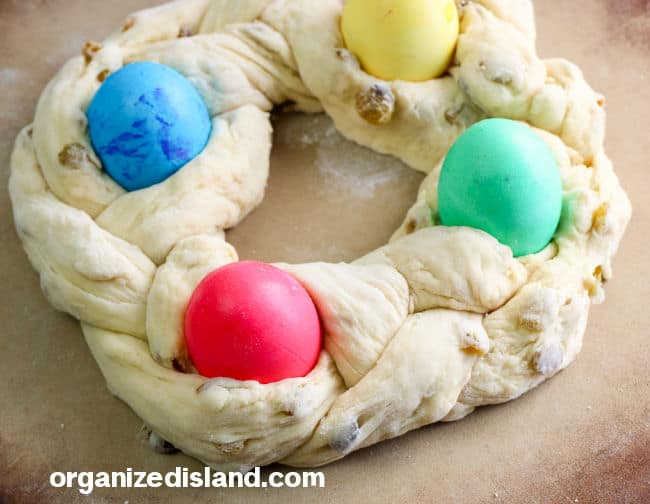
THEN YOU MAKE THE ITALIAN BREAD GLAZE
- If using the optional glaze, allow the bread to cool first. Mix all ingredients together and spoon over the bread. Add sprinkles if desired.
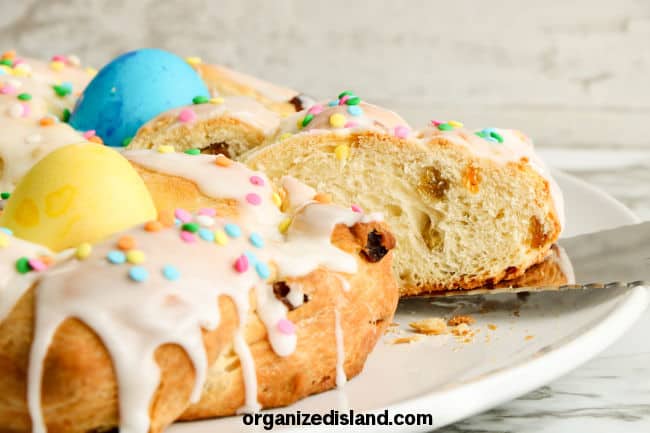
Tips for the Best Results
- Yeast activation: Ensure your milk mixture is warmed to about 110°F. This temperature helps activate the yeast without killing it. Using an instant-read thermometer is key here.
- Dough rise: Place your dough in a greased bowl, cover with plastic wrap, and let it rise in a warm spot free from drafts. The dough should double in size after the first rise.
- Shaping the wreath: When braiding, don’t worry if your dough is too elastic. Let it relax a bit before continuing. Once braided, shape it into a wreath and tuck the raw, dyed eggs between the braids.
- Egg wash for golden brown finish: For a beautiful golden brown crust, brush the shaped dough with an egg wash before baking.
- Don’t overbake: Keep an eye on the bread in the last 5 minutes to ensure it doesn’t overbake. You’re looking for a golden brown color, but the bread should still feel soft to the touch.
- Faster rise: If you want to help your bread rise faster, you can preheat your oven and then turn it off. After a few moments have passed, it’s a nice warm space for you to pop in the bread dough to make certain that it really rises fast!
- Make ahead: Make the bread dough the day before and then bake it when you have time. There’s nothing wrong with meal prepping a bit to save time later down the road.
Substitutions and Variations
- Flavors: Add a teaspoon of anise seed or vanilla extract to enhance the traditional flavor.
- Eggs: Natural dyes made from vegetables and spices can be used to color your eggs for a more earthy touch.
- Dough Variations: Substitute some of the all-purpose flour with bread flour for a chewier texture.
- Glaze options: If you’re not a fan of lemon glaze, a simple vanilla glaze or even a honey glaze would work perfectly.
- Storage: Store the finished bread in an airtight container or freezer bag to maintain freshness. It’s also excellent for making French toast the next day!
FAQs about Italian Easter Bread
Yes! You can make the dough the day before and let it rise in the fridge overnight. In the morning, bring it to room temperature before shaping and letting it rise again.
Traditionally, this recipe uses colorful dyed eggs, but if you prefer, you can use white eggs. The eggs will cook as the bread bakes.
No problem! You can knead the dough by hand with a wooden spoon and some elbow grease. It may take a little longer, but the results will still be delicious.
The most important thing that you need to do is keep the air away from the bread. This will dry it out fast and make it hard. Store the Easter bread recipe in an airtight container to keep it as fresh as possible for as long as possible. Keep leftover eggs in the fridge.
Make sure your yeast is fresh and your milk mixture is at the right temperature. The dough also needs a warm place to rise. If your kitchen is cold, try placing the dough in an oven with just the light on or near a warm stove.
You can. I wouldn’t freeze the eggs on top of the bread so remove that portion before putting it into the freezer. Make certain that you put the bread in a freezer-safe container or bag as well.
The bread itself isn’t overly sweet but if you happen to get a bite of raisin, you’ll get a nice natural sweetness. If you make and add the glaze, it will then add a lot of sweetness to this recipe.
Don’t forget to bookmark this recipe.
More fun Easter recipes
RELATED RECIPES
- Four Ingredient Easter Cookies – Fast and simple cookies that are perfect for Easter.
- Homemade Peeps – Make these and add them to everyone’s Easter baskets.
- Peanut Butter Eggs – Make your own version of this Easter candy.
- Easter Rice Crispy Treats – This favorite cereal snack makes for fun Easter Egg decorating!
- Coloring Easter Eggs – How to dye eggs with food coloring.
- Italian Easter Bread – A traditional Easter Bread recipe that is colorful and tasty.


Italian Easter Bread
Ingredients
- 3-3 1/4 cups all-purpose flour
- 2 1/4 tsp active dry yeast
- 1/4 cup sugar
- 1 tsp salt
- 2/3 cup milk
- 3 tbsp unsalted butter, divided
- 2 eggs
- 1/2 tsp golden raisins
- 4 uncooked but dyed eggs
Optional Glaze
- 1 cup powdered sugar
- 1 tsp lemon juice
- 2 tsp milk
Instructions
- In a mixing bowl, whisk together 1 cup of flour, yeast, sugar, and salt.
- Place 2 tablespoons of butter into a microwave-safe container with the milk. Microwave on high for 30 seconds. Check the temperature with an instant-read thermometer. If the milk has not reached 110 degrees, return to the microwave for an additional 10 seconds.
- Pour the milk into the mixing bowl and beat until combined. Add the eggs, one at a time, and continue beating until the mixture is smooth.
- Begin adding flour in small scoops until a soft dough is formed.
- Switch the mixing hook for a dough hook and knead the dough on medium speed for 5 to 7 minutes.
- Transfer dough to an oiled bowl and turn once. Cover and allow to rise in a warm place free of drafts, for approximately 1 hour, until it has doubled in size.
- Punch down the dough to deflate the air. Turn dough out onto a lightly floured surface and pat flat. Sprinkle with raisins and knead to combine.
- Divide the dough into three equal pieces.
- Roll each piece of dough into a long rope by running your hands over the dough pushing the dough from the center to the ends as you move your hands forward and backward over the dough. If the dough continues to be too elastic to retain its length, allow the dough to relax while you work on a different piece. Dough strands should be approximately 20 inches long.
- Line the strands parallel to one another. Squeeze one side of the ends together.
- To braid, start with the third strand from the left. Gently pass the strand over the 2nd strand and under the 1st strand, like a basic basketweave. Then, move to the strand all the way to the right and begin weaving over and under each strand until it reaches the left. Repeat with additional strands (about twice) until the bread is braided. Shape into a wreath and squeeze the ends together, tucking the squeezed ends under the bread.
- Tuck the uncooked, dyed eggs between the braids.
- Carefully transfer the bread to a parchment-lined baking sheet or large baking stone. Loosely cover the bread with a towel. Place in a warm spot, free of drafts, and allow to rise for 1 hour or until doubled in size.
- Preheat the oven to 350 degrees.
- Melt the remaining butter. Brush the melted butter over the bread, evenly coating the bread.
- Place the bread in the oven and cook for 30 to 35 minutes. Allow the bread to cool completely before slicing and serving.
- If using the optional glaze, allow the bread to cool first. Mix all ingredients together and spoon over the bread. Add sprinkles if desired.
Growing up more with Passover than Easter.. I never really understood what Easter Bread is until adulthood. I think it’s awesome. And I love those tucked in eggs! Now I see why you dye them but don’t cook them when you’re tucking them in. So cool!
That’s such a pretty Easter bread!